
St Merkorious – Charity, Community Meals and Volunteering in Australia
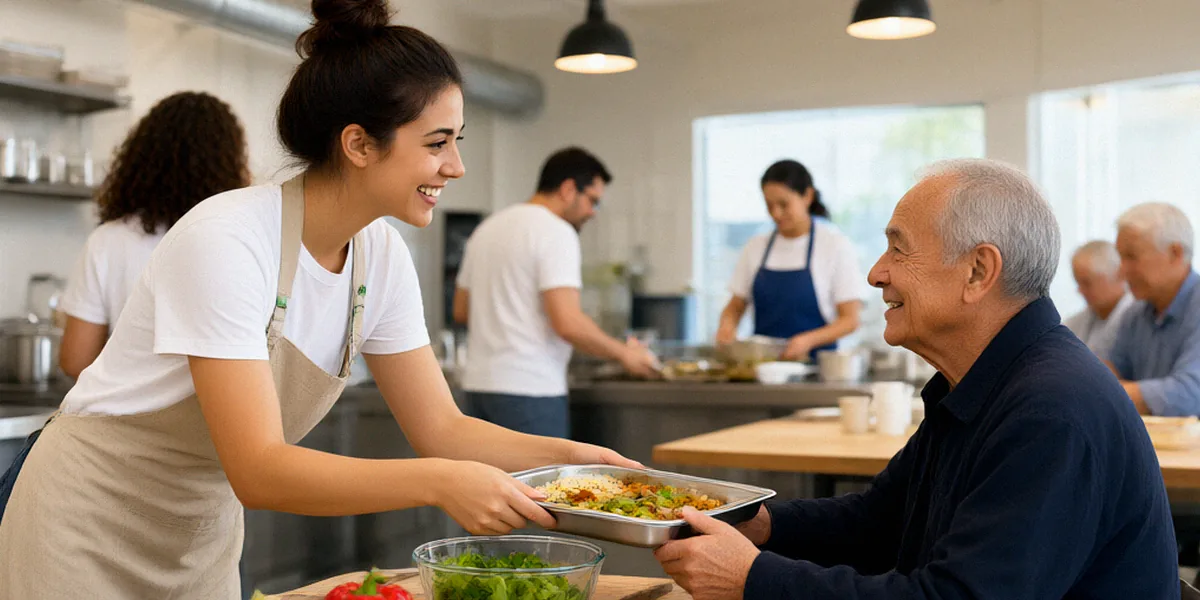
The queue starts forming just after five o’clock on a Tuesday afternoon in Parramatta. A grandmother in a floral headscarf chats with a uni student in a hoodie. A dad bounces a toddler on his hip while two tradies in hi-vis swap stories about the day’s jobs. The smell of slow-cooked curry drifts out of the hall, and someone’s already setting out plates. By six, the room is full — laughing, clattering, alive. This is what a community meal looks like in an Australian suburb, and it’s the reason our team gets out of bed in the morning. We believe shared food does something no food parcel alone can do: it builds stronger communities, one plate at a time.
At St Merkorious, we’ve spent years cooking, rescuing, serving and sitting down to eat with people from all walks of life. Whether it’s a hot dinner in Western Sydney, a food rescue run through Melbourne, or a fundraising sausage sizzle outside a Bunnings, everything we do comes back to the same idea — that nobody in Australia should eat alone, and nobody should go hungry while good food goes to waste. This page is your guide to who we are, what we do, and how you can be part of it.
Why Community Meals Matter in Australia
Australia is a lucky country in many ways, but that luck isn’t evenly spread. Behind the beach photos and café culture, a surprising number of households are skipping meals, watering down food to stretch it further, or lying awake worrying about the next grocery shop. Community meals are one of the simplest, most human responses to that reality. They don’t just fill stomachs — they break isolation, build friendships, and give people a place to belong without judgement or paperwork.
The reality of food insecurity Down Under
Foodbank Australia’s 2023 Hunger Report found that over 3.7 million Australian households experienced food insecurity in the past year. That’s roughly one in three households — a figure that should stop all of us in our tracks. It includes families with two working parents, retirees on fixed incomes, international students, and people who’ve just lost a job and are too proud to ask for help.
Food insecurity doesn’t always look like an empty pantry. Often it looks like a parent skipping dinner so the kids can eat. It looks like choosing between petrol and groceries. It looks like a uni student living on two-minute noodles for the fifth night in a row. The reasons are complex — rising rents, casual work, the cost of living, unexpected medical bills — but the outcome is the same: too many people in this country are going without.
We see it firsthand. Every week, people walk through our doors who’ve never accessed a charity before. Some are embarrassed. Some are angry. Most are just relieved to find a hot meal and a friendly face. Food insecurity is not a distant problem in a faraway place — it’s happening in the suburbs we drive through every day.
What makes this especially confronting is how invisible it can be. The family next door might look like they’re coping — kids in school uniforms, a car in the driveway, a lawn that gets mowed. But behind closed doors, they might be rationing meals, skipping breakfast, or relying on a single bag of rice to stretch through the week. Shame keeps a lot of people silent, and silence keeps the problem hidden. That’s why community meals matter so much: they offer help without the stigma, a warm room without the interrogation, and a plate of food without the paperwork.
How shared meals build belonging
There’s a reason we call them community meals and not just free meals. Sitting down to eat with other people is one of the oldest ways humans connect. It’s how we celebrate, how we mourn, how we make friends and how we remind each other that we’re not alone.
For someone who’s been sleeping rough, a shared meal can be the first time in weeks they’ve had a proper conversation. For a newly arrived migrant, it’s a chance to practise English and learn how things work here. For a single parent doing it tough, it’s a night off from cooking and a chance to talk to another adult. For a retiree whose partner has passed away, it’s a reason to leave the house.
We’ve watched friendships form over a bowl of soup. We’ve seen volunteers and guests swap phone numbers. We’ve had people come back week after week, not just for the food, but because they finally feel like they’re part of something. That’s the magic of a shared table — it turns strangers into neighbours, and neighbours into community.
There’s also something quietly powerful about eating the same food as the person next to you. It levels the playing field. Nobody’s plate looks different, nobody’s seated at a separate table, and nobody has to explain their circumstances. For an hour or two, everyone is simply a guest at dinner. That sense of normalcy is something a lot of people haven’t felt in a long time, and it can be the first step back toward confidence, connection and hope.
Our team’s approach to welcoming everyone
We don’t ask questions at the door. We don’t require referrals, ID, or proof of anything. If you’re hungry, you’re welcome. That’s the whole policy. Our team works hard to make sure every person who walks in feels seen, respected and safe — no matter their background, circumstances or story.
St Merkorious operates community meal services in Sydney and Melbourne, with plans to expand to Brisbane in the near future. Our meals are cooked fresh, served with a smile, and designed to reflect the diversity of the communities we serve — think curries, casseroles, pasta bakes, soups, and the occasional pavlova for a special occasion. We also make sure there are options for different dietary needs, because dignity matters as much as nutrition.
We’re not here to “save” anyone. We’re here to share what we have, learn from each other, and build a community where everyone has a seat at the table. That’s the spirit that drives everything we do.
Volunteering with St Merkorious: Join Our Team
Volunteering is the heartbeat of St Merkorious. Without our volunteers, there’d be no meals, no food rescue runs, no friendly faces at the door. Our team is made up of people from every walk of life — students, retirees, shift workers, parents, professionals, new arrivals — and every single one of them brings something valuable to the table.
We’ve built our volunteer program in partnership with Volunteering Australia, and we run regular training sessions in Parramatta and Footscray to make sure everyone feels confident and supported from day one. Whether you can give two hours a month or two days a week, there’s a place for you here.
Roles that fit your skills and schedule
One of the things we hear most often from new volunteers is, “I’m not sure what I can do — I’m not a chef.” Good news: you don’t need to be. Our volunteer roles are as varied as the people who fill them, and we’ll help you find the one that suits your skills, interests and availability.
- Cooking and meal prep: Chop veggies, stir pots, taste-test (the best job), and help turn rescued ingredients into beautiful meals.
- Serving and hosting: Greet guests, set up the dining space, serve food, and make sure everyone feels welcome.
- Driving and deliveries: Pick up rescued food from supermarkets, farmers and restaurants, and drop meals to community partners.
- Food rescue and sorting: Check, sort and store rescued food at our Western Sydney hub, making sure everything is safe and ready to use.
- Admin and coordination: Help with rostering, data entry, phone calls, social media and the behind-the-scenes work that keeps us running.
- Events and fundraising: Run sausage sizzles, bake sales, trivia nights and community stalls to raise funds for our mission.
- Skilled volunteering: Bring your professional skills — graphic design, accounting, legal, marketing, IT — and help us grow.
Commitment is flexible. Some volunteers come every week, some come once a month, and some jump in for special events. We’ll work with you to find a rhythm that fits your life. If you’re not sure which role suits you best, that’s completely normal — come along to an orientation, try a couple of different shifts, and see what clicks. Most volunteers find their niche within a few weeks, and plenty end up doing more than they ever expected.
What to expect on your first shift
Your first shift is all about getting comfortable. When you arrive, one of our team leaders will give you a quick tour, introduce you to the crew, and walk you through what you’ll be doing. You’ll get a brief safety and hygiene rundown, an apron, and plenty of encouragement.
We don’t throw anyone in the deep end. If you’re nervous about serving, you can start in the kitchen. If you’d rather be behind the scenes, we’ll find you a role that suits. The goal is for you to leave your first shift feeling useful, welcomed and keen to come back.
We also run regular volunteer orientations in Parramatta and Footscray, where you can meet the team, ask questions, and learn more about our mission before committing to a shift. These sessions are relaxed, friendly and open to anyone curious about getting involved.
It helps to wear comfortable clothes and closed-toe shoes, and to bring a water bottle. Everything else — aprons, gloves, training and a hot meal at the end of the shift — is on us. If you have any accessibility needs or dietary requirements, just let us know in advance and we’ll make sure you’re looked after.
Stories from our regular volunteers
Priya started volunteering with us two years ago after moving to Sydney from India. “I was lonely and wanted to meet people,” she says. “Now I’ve got a whole second family. I come every Thursday and I wouldn’t miss it for anything.”
Dave, a retired plumber from Melbourne’s west, signed up after his wife passed away. “I needed something to do with my hands and my heart,” he laughs. “Turns out I’m pretty good at peeling potatoes. Who knew?”
And then there’s Mia, a uni student who started as a way to fill her resume and stayed because of the people. “I’ve learned more about life in this kitchen than I have in any classroom,” she says. “It’s changed how I see everything.”
Stories like these are why we do what we do. Volunteering isn’t just about giving — it’s about receiving, too. The friendships, the laughter, the sense of purpose — it goes both ways. We’ve had volunteers who arrived shy and unsure become team leaders within a year. We’ve had people who came for a single shift end up bringing their whole family along the next week. That’s the kind of place we’ve built, and it’s the kind of place you can help us grow.
Food Rescue: Turning Surplus into Support
Every year, Australia wastes an enormous amount of perfectly good food while millions of people go hungry. That contradiction is what drives our food rescue work. We partner with supermarkets, farmers, restaurants and other food businesses to rescue edible surplus food before it ends up in landfill — and turn it into meals for people who need them.
It’s one of the most practical, impactful things we do. It reduces waste, supports the environment, and puts good food on plates instead of in bins. Everybody wins.
How our food rescue network operates
Our food rescue partnerships include Coles, Woolworths, and SecondBite, along with a growing network of local farmers, bakeries, cafés and restaurants. Here’s how it works:
- Collection: Our volunteer drivers pick up surplus food from partner stores and businesses on a regular schedule.
- Transport: Food is transported in temperature-controlled conditions to our food rescue hub in Western Sydney.
- Sorting and checking: Volunteers inspect every item, checking use-by dates, packaging and quality.
- Storage: Safe items are stored in fridges, freezers or dry storage, ready for use in our kitchens or distribution to community partners.
- Transformation: Rescued ingredients become the basis of our community meals — soups, curries, casseroles, salads, baked goods and more.
- Distribution: Surplus meals and food parcels go to partner organisations, shelters and households in need.
Our hub in Western Sydney is the engine room of this operation, and it runs on the dedication of our volunteers. Without them, tonnes of edible food would be wasted every week. The logistics are more complex than most people realise — cold chain management, timing, routing, storage capacity — but the payoff is enormous. Every successful run means another family eats well, another bin stays empty, and another farmer’s hard work doesn’t go to waste.
Safety and quality standards we follow
Food safety is non-negotiable. We follow strict standards aligned with Australian food safety regulations, and every volunteer who handles food completes training before their first shift. Here’s what we do to keep everyone safe:
- Check use-by and best-before dates on every item
- Reject anything with damaged packaging, spoilage or temperature issues
- Maintain cold chain integrity from pickup to storage
- Follow hygiene protocols, including handwashing, gloves and clean uniforms
- Log every donation and track it through the system
- Train volunteers regularly on safe food handling
We’d rather turn something away than risk someone’s health. That’s a promise we take seriously.
Environmental wins from rescuing food
When food ends up in landfill, it decomposes without oxygen and releases methane — a greenhouse gas far more potent than carbon dioxide. By rescuing edible food, we’re not just feeding people; we’re reducing emissions, saving water and land used to grow that food, and easing pressure on our waste systems.
Every tonne of rescued food is a small environmental victory. Multiply that by the thousands of tonnes rescued across Australia every year, and the impact is enormous. Our team is proud to be part of that effort — and we’re always looking for new partners to help us rescue even more.
There’s also a cultural shift happening. More and more Australians are asking why we throw away food that could feed people, and more businesses are stepping up to do something about it. Food rescue isn’t just a charity issue — it’s an environmental issue, an economic issue and a moral one. The more people who get involved, the bigger the difference we can make together.
Fundraising and Donations: Fuel Our Mission
Every meal we serve, every food rescue run we make, every volunteer we train — it all costs money. As a charity, we rely on the generosity of individuals, businesses, councils and community groups to keep the lights on and the pots bubbling. Fundraising isn’t glamorous, but it’s essential — and it’s something everyone can get involved in.
Where your money goes
We’re committed to transparency. When you donate to St Merkorious, here’s roughly how your money is used:
- Ingredients and food: Filling the gaps where rescued food isn’t enough to cover a meal.
- Kitchen and venue costs: Rent, utilities, equipment and maintenance for our meal sites.
- Food rescue operations: Fuel, vehicle maintenance, cold storage and hub running costs.
- Volunteer training and support: Orientations, materials, uniforms and coordination.
- Outreach and community engagement: Reaching people who need us but don’t yet know we exist.
- Administration: Keeping the organisation compliant, insured and sustainable.
A donation of $50, for example, can help provide around ten hot meals. A monthly gift of $20 helps us plan ahead and commit to regular services. Every dollar makes a difference, and every donation — big or small — is deeply appreciated. Regular giving is especially valuable because it lets us plan menus, schedule rescue runs and commit to the communities we serve without worrying about week-to-week uncertainty.
Upcoming fundraising events
Our annual Winter Warmth Appeal is the biggest event on our calendar. It raises funds for meals and blankets for people experiencing homelessness during the coldest months of the year. Winter in Australia can be brutal for people sleeping rough, and the appeal allows us to provide not just food but warmth, comfort and dignity.
Beyond the Winter Warmth Appeal, we run a range of events throughout the year:
- Community trivia nights
- Bake sales and cake stalls
- Sausage sizzles at local Bunnings stores
- Charity fun runs and walkathons
- Corporate fundraising days
- Online giving campaigns
Keep an eye on our website and social media for dates and details. Better yet, sign up to our newsletter so you never miss an event.
Corporate and community partnerships
We’re proud to work with a range of corporate and community partners who share our vision. Our corporate partnerships with Bunnings and local councils have been particularly valuable, helping us reach more people and raise more funds.
If your business, school, church, sports club or community group is looking for a charity partner, we’d love to hear from you. There are many ways to get involved:
- Sponsor a meal service or food rescue run
- Host a workplace fundraising event
- Match employee donations
- Provide pro bono services or supplies
- Volunteer as a team
- Donate surplus food or goods
Partnerships aren’t just about money — they’re about shared values and shared impact. When businesses and community groups come together with us, everyone benefits. Employees get a chance to give back, businesses strengthen their community ties, and the people we serve get more meals, more support and more hope.
Get Involved: Volunteer, Donate, or Partner with Us
If you’ve read this far, you’re probably wondering how you can help. The good news is there’s no wrong way to get involved. Whether you’ve got time, money, skills, food or a platform, there’s a place for you in the St Merkorious community.
Ways to give your time or resources
Here are some of the most common ways people support us:
- Volunteer: Join our team in the kitchen, at the door, on the road, or behind the scenes. We have regular volunteer orientations in Parramatta and Footscray, and we’re expanding to Brisbane soon.
- Donate: Make a one-off gift or set up a monthly donation. Every dollar helps us serve more meals and rescue more food.
- Donate food or goods: If you’re a business with surplus food, we’d love to partner with you. We also welcome donations of blankets, toiletries and non-perishable items.
- Fundraise: Run a bake sale, trivia night, or workplace giving campaign. We’ll support you with materials and ideas.
- Partner with us: Businesses, councils, schools and community groups can partner with us in many ways. Our partnership with SecondBite for food rescue is a great example of what’s possible.
- Spread the word: Follow us on social media, share our posts, and tell your friends and family about what we do.
Hosting a fundraiser for St Merkorious
Hosting a fundraiser is one of the most fun and rewarding ways to support our work. It doesn’t have to be big or complicated — some of our most successful fundraisers have been small, local and heartfelt.
Here are a few ideas to get you started:
- Host a morning tea at work and ask for a gold coin donation
- Run a casual clothes day at school or the office
- Organise a community BBQ or picnic
- Set up a birthday fundraiser on social media
- Run a trivia night at your local pub
- Host a movie night or games night
- Sell handmade crafts or baked goods
We’ll provide you with resources, posters and support to make your fundraiser a success. Just get in touch and we’ll help you plan it.
Contact our team
Ready to take the next step? We’d love to hear from you. Whether you want to volunteer, donate, partner with us, or just learn more, our team is here to help.
You can reach us through our website at stmerkorious.org, follow us on social media, or drop by one of our meal services in Sydney or Melbourne. If you’re in Brisbane, keep an eye out — we’re coming your way soon, and we’d love to have you on board from the start.
Every conversation starts with a hello. So say hello — we’re looking forward to meeting you.
Every meal we serve and every hour volunteered strengthens Australian communities. Whether you’ve got a spare afternoon, a few dollars, or a whole business behind you, you can be part of something that truly matters. Take the next step with our team today — volunteer, donate, or partner with us, and help us build a country where nobody eats alone and no good food goes to waste.
Frequently Asked Questions
Do I need experience to volunteer with St Merkorious?
Not at all. Most of our volunteers start with no experience whatsoever. We provide training, orientation and ongoing support, and we’ll match you with a role that suits your skills and comfort level. If you can smile, chop a carrot or drive a car, you’re already qualified.
Where does St Merkorious operate?
We currently run community meal services in Sydney and Melbourne, with food rescue operations centred at our hub in Western Sydney. We’re also planning to expand to Brisbane in the near future, so if you’re based in Queensland, get in touch — we’d love to hear from you.
How can my business partner with St Merkorious?
There are many ways businesses can partner with us — sponsoring meal services, hosting workplace fundraisers, matching employee donations, donating surplus food, or providing pro bono services. We’ve partnered with organisations like Bunnings and local councils, and we’re always open to new collaborations. Reach out through our website to start a conversation.
Is my donation tax-deductible?
Yes, donations to St Merkorious are tax-deductible for Australian taxpayers. You’ll receive a receipt for your records, and you can be confident that your gift is being used to support our community meal, food rescue and volunteering programs.
How do I sign up for a volunteer orientation?
We hold volunteer orientations regularly in Parramatta and Footscray, and we’re adding more locations as we grow. Visit our website or contact our team to register for the next session. Orientations are relaxed, informative and a great way to meet the crew before your first shift.
Latest articles
- Who Was Saint Mercurius?
 Who Was Saint Mercurius? The Story Behind Our Charity Mission It’s a Tuesday evening in a church hall in Melbourne’s west, and… Read more: Who Was Saint Mercurius?
- Volunteering with Kids
 Volunteering with Kids: How Families Can Make a Difference in Australia It’s 5pm on a Tuesday at a community hall in Western… Read more: Volunteering with Kids
- Volunteering in Sydney: Getting Started
 Volunteering in Sydney: Getting Started Rent is up, groceries are up, and yet every week tonnes of good food still gets thrown… Read more: Volunteering in Sydney: Getting Started
- The Coptic Community in Australia
 The Coptic Community in Australia: Faith, Charity, and Community Meals We still remember the first time we walked into a Coptic church… Read more: The Coptic Community in Australia
- Running a Charity Fundraising Dinner
 Running a Charity Fundraising Dinner: A Practical Guide from Our Team Our first fundraising dinner nearly broke us. We had 80 guests… Read more: Running a Charity Fundraising Dinner
- Organising a Food Drive
 Organising a Food Drive: How We Turn Community Spirit into Real Meals Last week I watched a supermarket trolley stacked with discounted… Read more: Organising a Food Drive